
July 2024
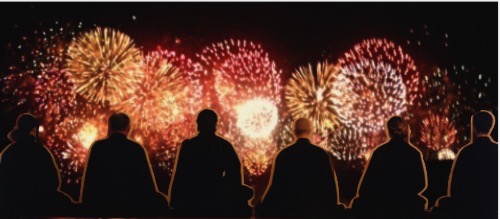
The coming of July 4 has got me thinking about the “pursuit of Happiness,” which apparently is our God-given right as Americans. And let’s not forget Life and Liberty, either, except those the Declaration of Independence guarantees us without qualification—happiness, not so much. We tend to forget this, or misinterpret the meaning of the phrase, thinking somehow that happiness, too, is an inalienable right, when actually all we’re really entitled to is its pursuit—which could be the same thing but so often isn’t.
It’s such an American energy—this kind of a pursuit—we love chasing things (especially ethereal things like happiness that resist being found). Actually, maybe it’s not so much an American energy as it is a human energy—or perhaps, even broader, a life energy. Pursuit belongs to all forms of existence, after all. Food, water, warmth, love. All life must chase these things to persist. One might even say that the energy of the chase is life. To be after something is to be alive.
June 2024
Outside in the late-May sunshine, it is snowing. Great downy flakes are blowing about in the wind—a summer storm of fluff and seed. “Look, Ollie!” I tell my son. “It’s snowing!” “Get out of here, Daddy,” he responds.
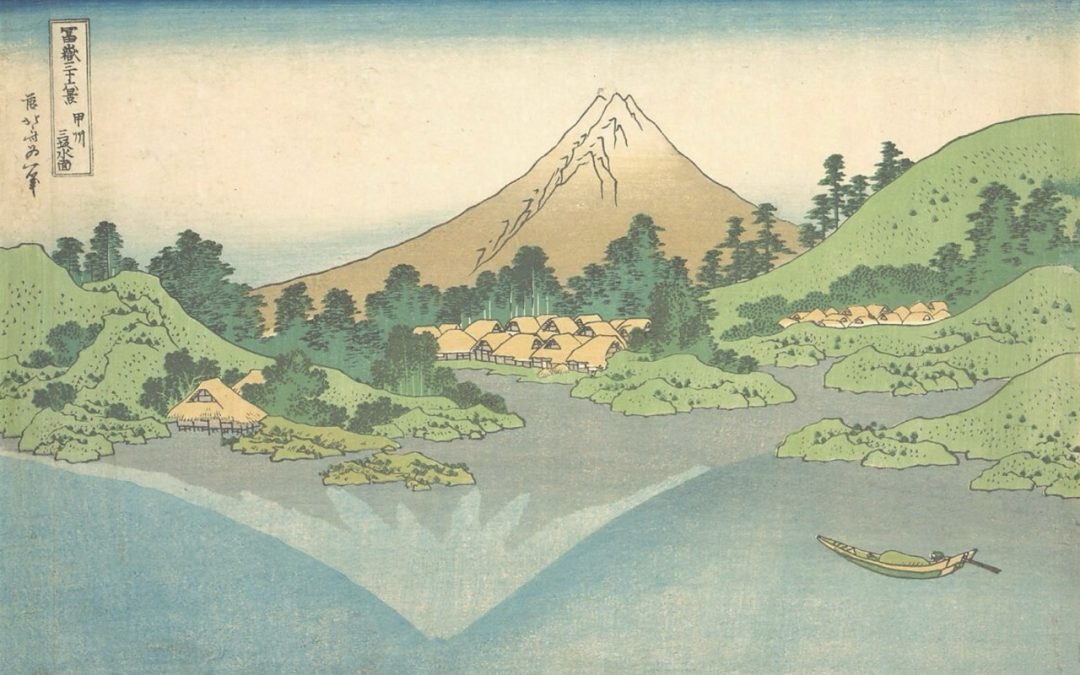
I appreciate how in Zen, and in life, there are no real rules. It can snow in June, up can be down, a whole buffalo can pass through a window (well, except for its tail). The answer to almost everything is yes and no.
Language tries to pin things down, but Zen—and life—resists this attempt. Words fail. And yet the very act of expression—whether through a poem, or the arrangement of a few simple flowers—nevertheless embodies the Great Way itself. Words may never capture the entire truth, but in reaching for it, they sing, and that song is what life is all about.
May 2024
Imagine an existence where nothing changed. An amorphous, undifferentiated blob. Gray, uniform. No movement, no space to move, no space to breathe. No breath. Just this purgatorial between—going nowhere, on and on, forever and ever the same.
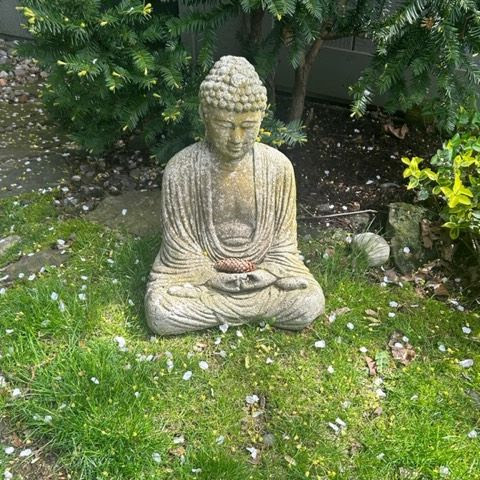
Now, perceive this existence we’ve been blessed with: This beautiful, heartbreaking world of constant flux and shift. In the front yard, a weeping cherry tree sheds its blossoms, and they are scattered to the winds. Infants are thrust, screaming, from darkness into blinding light. Beloved dogs grow old and die. One minute, the heart is pierced with great joy; the next, with great sorrow. All around us, there is space—space to breathe, to grow, to move—and everything delights in this opportunity: stirring, shifting, dancing. Atoms vibrate, birds flitter from tree to shimmering tree, the clouds rush across the sky. People come, and people go. And the color, what color!
April 2024
I’ve always wrestled with the Buddhist notions of interdependence and emptiness. As far as I understand it, the fact that everything depends on everything else—that no single thing exists in and of itself (and apart from everything else)—is what ensures that no solid, abiding, individual self exists. Or, to put it another way, because everything leans on everything else, emptiness pervades the universe. Out of relationship: emptiness.
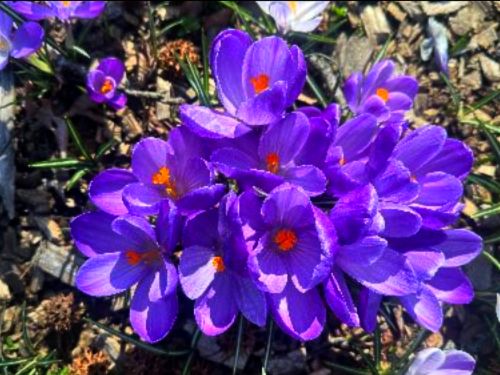
And yet—out of relationship, what fullness! What life! Out of relationship, flower, moon, mountain, heart. Out of relationship, a helping hand, a warm hug, a kiss. Out of relationship, Sangha! Yes, who could imagine that out of emptiness, this heartbreakingly beautiful tenderness, this love, this support—and yet as Shuso Hossen so wonderfully demonstrates, this is what we belong to: this is who we are, and what life is. Or, as Jyākuen wrote in a recent email, “We are all part of the most Amazing Community—Sangha, Sangha . . . SANGHA.”
March 2024
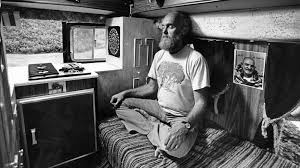
I stole the above Ram Dass quote from the wonderful conversation between Ryusho and Tendo on the joys and hardships of parenting (see below for the whole interview—it’s a really good one). One of the things that stuck with me from their intimate discussion—besides the great truth that family is a relentless place of practice—is how valuable Sangha is in letting us know that we are not alone. As Tendo so eloquently puts it, “The idea, ‘There’s something wrong with me,’ shifted to, ‘Well, this is what people experience.’”
Me, I’ve always been a bit of a loner. Even today, despite (and perhaps directly related to) the demanding relationship of spouse and kid, I imagine an escape to the mountains of Tibet—some solo hermitage, a cozy cave perhaps, where I could have the space and time and solitude to finally figure it all out, become enlightened, and live happily ever after. Of course, the whole point of the Ram Dass quote is exactly how insubstantial that kind of enlightenment is—who cares if you’re one with the universe when you’re on some distant mountain? (Especially if when you come down from the mountains and rejoin your family, you immediately turn back into an asshole.) The enlightened way has to be practiced in the everyday—in relationship—or it probably doesn’t mean much.
February 2024
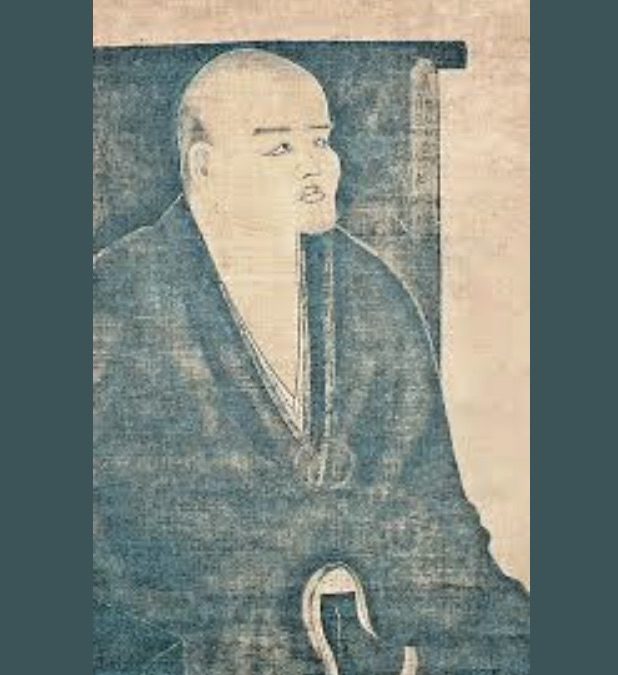
I’ve been noticing my nonsense a bit more as of late. (Not that I’ve been able to do much about it, but I guess noticing is a start.) For instance, my moods around the house with my wife and kid. I see myself clinging to momentary misery with such determination and loyalty, when really, what actually has happened that’s so awful: Undone dishes? An unwalked dog?
Of course, there’s a perverse kind of satisfaction in feeling like the world is out to get you—it buoys up the self. It’s you against an unjust universe—a real underdog story. Massively indulgent, you wallow contentedly in self-righteous indignation. Who knew there could be so much pleasure in misery?
The real absurdity of this behavior is how much real misery there is out there in the world. I mean, there’s more than enough suffering already—do I really have to invent more? Apparently, yes, I do. I’m not sure, but I suspect that, as with most human issues, this may be a fear thing. Because just as a dedication to misery can solidify the self, so can true joy dissolve it. And as much as we Zen students profess to want to forget the self, I know from personal experience that often that’s sort of the last thing I want. Instead, I’ll do anything and everything in my power to keep myself from disappearing.
December 2023
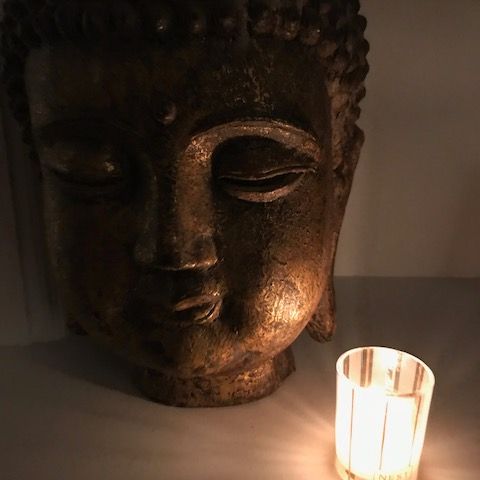
As we’re coming up on the holiday season, I’ve had shepherds on my mind. As both metaphor—and vocation—shepherds hold a prominent place in almost every religion. Some of the great figures in the bible were, of course, shepherds—Abraham, Moses, little David who would one day become king. Muhammad, himself a shepherd in his youth, once said, “There was no prophet who was not a shepherd.”
So it is in Zen, though of course, instead of shepherds, we talk about bodhisattvas—but it’s sort of the same thing. To take the bodhisattva vow of saving all sentient beings, this is to be a shepherd to all of life—to your own life—to guard this precious universe and everything in it with great tenderness and love.
Life would be so different if we were all there for each other in this way—not in any sort of annoying in your face kind of way—just there for each other. (Shepherds aren’t all up in their sheep’s business either, when you think about it—they watch over them quietly, their simple, alert presence enough to keep them safe.) Interestingly, I believe that in some senses, we are all already doing this.
November 2023
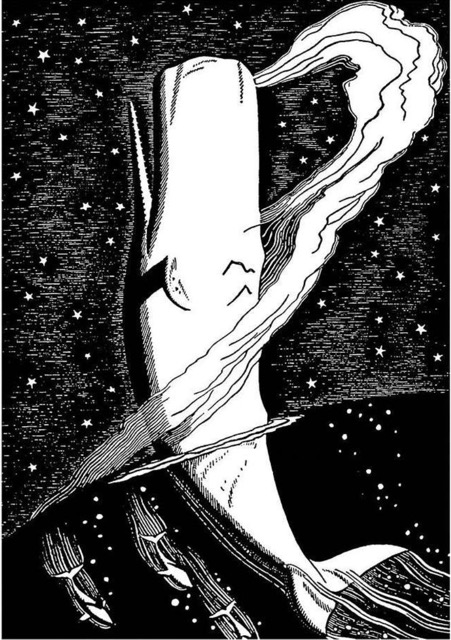
I admit—it’s been a bit of a damp, drizzly November in my soul as of late, and it’s not even November yet—in fact, as I’m writing this, it’s a warm, bright, clear October day. I could go into all the reasons I’ve been feeling this way—there’s plenty for us all to be depressed about these days, no doubt—but better, I think, to focus on all the ways I could theoretically do something to extricate myself from this grim state. In other words, how can I, like Ishmael, get to sea?
Well, one thing I can do, and I did it the other day for the first time in almost four years, is get my butt to the Zendo. And it did indeed help—even though I’d never before sat in the new space, it truly felt like coming home. And zazen itself is of course another good response. I’ve heard Myoko Roshi talk about how zazen can create a kind of spaciousness—almost like it opens up a sea within us—so that we have a little more room to breathe.
Another good response is touched upon in an interview below with Tsuh Yang, who talks about the intersection of his Zen practice and his volunteer work: Do something for someone else. Get out of your head and into the world, shift your focus away from yourself and onto someone else, and do what you can to help. (As Tsuh Yang mentions, one of the interesting questions that inevitably arises is: who is helping who?)
October 2023
It’s Halloween this month, which has me thinking about masks and costumes and that eternal, terrifying question, Who are you? Well, as Whitman reminds us, the answer is not always so singular and simple. After all, each one of us contains multitudes—one moment we are happy, the next we are sad; one instant we are compassionate, the next full of rage. We are angel and demon, hero and coward, lover and hater. We change costumes, one to the next, swiftly and often with little to no consciousness about it. And beneath these ever-shifting masks, what? Who?
My own honest answer to this age-old question—I don’t know—is not a very satisfying one (at least not for me it’s not). In fact, it only serves to heighten the question itself, and to deepen the terror inherent in my lack of a response. Zen’s apparent answer to this question doesn’t seem to help much either (or at least for me it doesn’t). After all, our practice maintains that the idea of a permanent or abiding self—a solid internal “you”—is just an illusion.
September 2023
Dog years are a devastating phenomenon, if you have a dog you love. Seven years to our one, is the formula. That means my sweet little girl-puppy, nearing ten years old, is really almost seventy now. It also means that one day is, for Brooklyn, somehow seven. Yes, each day is a week, each week is near two months, each month is more than half a year. Oh, for time—for life—to move this quickly, galloping so relentlessly on.
We humans are not immune to this version of time. Indeed, that one year suddenly becomes seven: this is the nature of our lives, too, is it not? Certainly, it did not take 47 years for me to become 47. Time skips and lurches and falls away—great gulps of it are swallowed up—and then, impossibly, here you are.
